
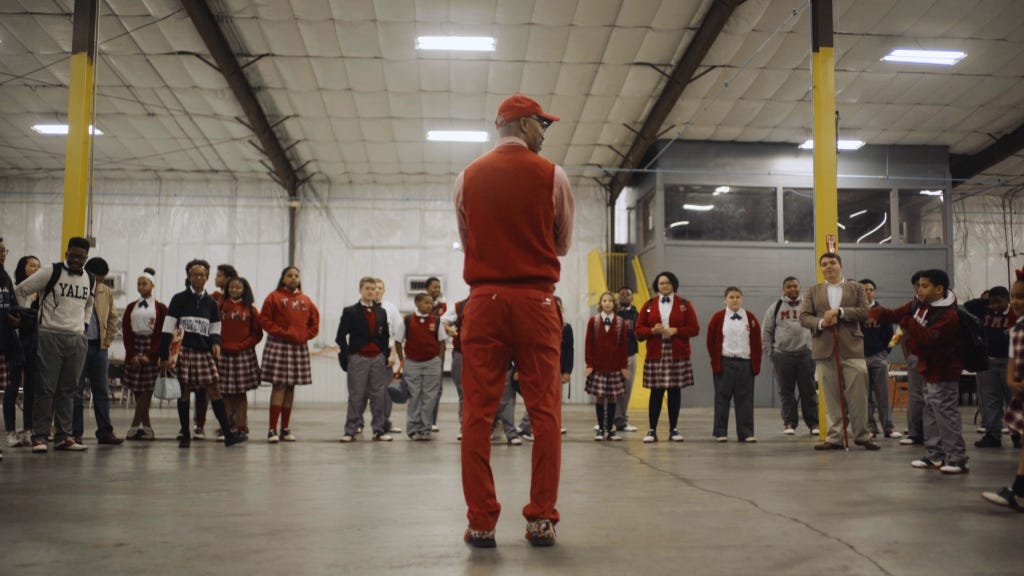
Accepted directed by Dan Chen is an educational and heartfelt documentary that focuses on the nearly perfect success rate of the Louisana-based T.M. Landry College Preparatory, which boasts of closing the educational inequality gap faced by minority students in search of higher education past high school. Despite not having proper teaching credentials, the school’s namesake founder Mike Landry, alongside his wife (the T stands for Tracey, Mike’s wife), was able to get kids into top-tier colleges such as Cornell University, Harvard University, and New York University.
When YouTube videos went viral from students getting their acceptance letters, the media picked up on the self-proclaimed gifted school and pried a little too hard and unveiled some deep, dark secrets. In the middle of making the documentary, which was originally meant to just focus on the students of the Landry school, The New York Times put out a damning piece that exposed the school and its leaders for misconduct in regard to falsifying documents, harassment, and abuse. Chen and the rest of the film crew had to make a choice: stop making the documentary or just slightly pivot focus towards the kids and their futures beyond the school.
The Black Cape sits down with Chen to talk about the making of Accepted.
Destiny Jackson: Talk to me about how this documentary came to be, like, how did you kind of conceptualize it? How did you find out about the Landry school?
Dan Chen: I heard about the school through actually one of my producers, Jason Lee. We both work at a company he’s the CEO of this company called Jubilee Media. And so Jubilee media kind of does a lot of YouTube content but also started doing longer form projects around these stories that resonate with young people, inspirational stories, stories that provoke empathy. And so he had heard about the school and kind of was like, “Dan, I know you have experienced doing documentaries on real locations with real people. Would you be interested in potentially directing something like this, if we were to pursue this school?” And so I learned a little bit more about the school. I watched the viral videos and I kind of connected to the idea of being an outsider and of a lot of these kids were Black and Brown.
So being like a minority kid in a small town and going for dreams that maybe society doesn’t expect you to be able to achieve–which is why the viral videos should big splash in the first place. And so it’s kind of this feeling of you’re going for this dream, you have your own individual reasons why you’re going for it. And also now there’s [an additional] pressure for you to succeed. Because now all this media attention’s on your school and you want to be an individual and you wanna live your own story. But at the same time, now it’s like, oh you made it, how will you be an example for others? And it’s kind of like, what’s it like to feel that pressure? And also what’s it like to just go through that experience of going to a very unconventional school and what’s it gonna be like when you start applying to college? So I guess I connected to that idea of being kind of an outsider and going for a big dream that seems out of reach but going for it, nonetheless.
You grew up in Kansas, right? And ended up at USC Film School. So I would assume some of these students’ stories kind of hit home for you, but was there anything like in the process of making this, that you learned about yourself at the end of the day?
Chen: I mean, so many things. I don’t even know if I can go into all of them just cause I might forget, but you know, one of the things I was thinking about my 20th time watching this movie was there is something compelling about the way Mike Landry would talk that I found compelling. And I think I realized it’s because when I grew up, I kind of felt like an outsider sometimes. And I felt like I needed to prove my worth to society, prove my worth to prove that I belong in a film school or a bigger place than I grew up in. And so I would often have a voice in my head that kind of sounded like Mike Landry, which is like, no excuses, you better work hard. You better prove that you deserve to be here. World’s not fair, but you gotta like pull yourself up anyway. And so, just like kind of witnessing what these students went through by going to a school like T.M. Landry. I mean, they say [in the documentary] there were good things and bad things. Some of these things were totally uncalled for, but some of these things also made me look at the world in a different way and made me stronger and gave me resilience. And so I do feel like there’s a lot of ambivalence there that, you know, Mike Landry is a flawed person that made a lot of mistakes, but he’s also this person in a flawed system that demands people to sell themselves a certain way or to put ourselves into certain boxes. And so, I don’t know, it’s a complicated story and I just felt like I, at the end of the day, really resonated with the journey of the students without even realizing how much I resonated with it at first.
Before the scandal about the school dropped, what was the original idea behind the documentary? Like essentially, what would Accepted look like if the New York Times piece hadn’t happened during production?
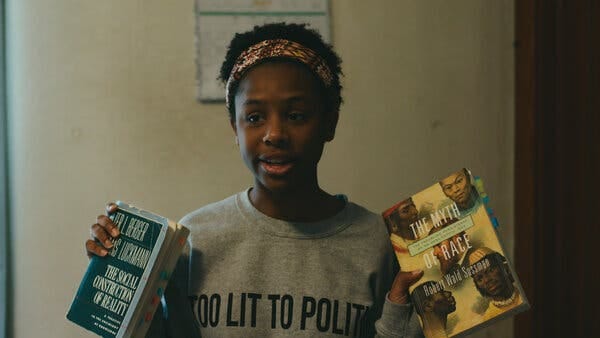
Chen: The idea was always to follow the school year. So there was a class of seniors that went viral because of their acceptance videos. And now this is the story of the class that follows them. Will these students get into the schools that they want to get into? What are their individual personalities and hopes and dreams? What are the obstacles that they go through? And the film does explore that to some degree. And we would’ve probably been more plugged in with the school the entire time, as in like; this is how Mike Landry is feeling about this or that. And will he be able to succeed here or there? And what the film ended up being is far more from the students themselves perspective and kind of, I mean, our relationship with Mike got complicated and conflicted during the filming of it. And so I actually think at the end of the day, ultimately it was better for the film that it was more from the student’s perspective and less from the school’s perspective, if that makes sense. Cause I feel like you have Mike’s story about them. You have the media kind of looking at them a certain way. And now I feel like if the film can do anything, it’s centering the student, the student’s voices, and letting them speak for themselves.
What was the most challenging part about making this documentary? I mean, I would imagine it was that conflict with Mike towards the latter half of the film where he tells you to put the camera away during the graduation ceremony but …
Chen: There’s no one challenge. I mean speaking from the very beginning, it was just endurance. We went to the school for the first week of filming. We would wake up at 4:00 AM to get there when it opened, and we would stop filming at 9:00 PM as Mike would still be teaching there. And just like trying to hang in there and be coherent and be awake and follow everything that was happening and connecting with these students. I mean one thing I still think about today is the responsibility of representation to be self-aware that I am Chinese American, I am not Black American, which is the majority of the characters, the students that we’re following and being able to juggle these perspectives in the film in a fair way and in a clear way. But also ultimately prioritizing the student’s stories beyond any one given political kind of framework. And so that’s a huge thing that we thought about.
And then there’s just the challenges of documentary filmmaking in general of editing a compelling and clear story. And there’s also what happened in the middle of the school year, the fact that the entire story changed the fact that we actually ended the documentary in the middle of it because we felt like we were telling one story and we didn’t wanna lie or mislead anyone in the story that we were telling. And we didn’t wanna make it into some kind of seedy investigative piece like we are uncovering something. When we found out about the allegations against the school, our first priority was stopping the [documentary.] And instead of being like, “How can we help?” and “Can we help put you in touch with anyone?” And it wasn’t until after the New York Times article came out, that we even felt like there was a productive way to take the story we had been telling and, and finish it in a different way. So yeah, this was my first documentary feature and I think I’d say I learned a lot.
I would imagine that as a documentarian this might be more of a nightmare and less of a dream for this drama to unfold in the middle of making it?
You know, I’ve been doing a few interviews and everyone is always like, “Yeah, isn’t that amazing what happened?” … and the answer is no. It felt horrible when the [scandal news] happened. At no point was I was like, “Yes, we’ve unlocked it.” It felt so horrible because we wanna help the people we’ve met because that matters more than the project.
That makes sense. And I’m guessing Mike didn’t even really lead you all on to what he was really doing, because nothing in the documentary really points to you all capturing this scandalous behavior. He does have some attitude flare-ups, but it’s not damning.
Well, and the students would say like he was different when [we] weren’t there. And now in retrospect, I see actually there was kind of a growing tension happening between us and him and the faculty leading up to the New York Times article. I’m guessing because he didn’t want us to ask certain questions or look in certain directions and he wanted to, you know, maintain control of the narrative. And so in retrospect, it makes more sense to me at the time we were kind of like, why is it getting weird here and how come he feels like he can’t trust us when I feel like we’re trying to be as transparent and, and open and curious as possible.
[Edited for length and clarity]
[This interview was originally published for The Black Cape magazine]
 Destiny Delights