
Though it’s been 8-months and several hundred COVID-19 variants since the ending of HBO’s iconic Issa Rae series Insecure, it still feels like just yesterday that the intertwining lives of four hilarious and complex Black women debuted on our screens. Insecure was not only groundbreaking at the time of its premiere in 2016, but it will also stand the test of time as a cultural reset for narratives about Black women living their well-rounded lives on screen. Insecure helmed by seasoned industry producer and first-time showrunner, Prentice Penny, unabashedly followed the casual sex lives, messy drama, and existential crises that come with living in such a visceral way. The Black Cape talks to Prentice about his time at Insecure, Emmys season, and what inspires him as a filmmaker.
Destiny Jackson: Congratulations on your new partnership with USC to get people of color in front and behind the camera, can you talk a little bit more about how this idea came about?
Prentice Penny: It was a myriad of things. One [since my time at Insecure and afterward] I’ve been asked to speak more like just more places and obviously as an alumna of USC, the film school was one of them. And one of the things I just remember was like, how tough it was to like get going [on this career.] A common question is, ‘How do I get started?’ And I wanted to always find ways to help, Black students or any student of color to get their start. Because I just know how difficult it is in that way. And so it was kind of all these ideas converging in my mind. Then I did a panel at AFI where it was students who wanted to write television and who could pitch and it involved giving them advice for like five minutes. And these two women pitched this really amazing project. And so I asked them afterward if they would be interested in developing [their project] with me. And then we ended up selling it in my new deal at Disney. And I was like if I can do this at AFI…[then perhaps I can do it elsewhere.] And I just know how hard it is when you’re about to graduate. When you’re a student you’re very protected. And the world is sort of there to like to nurture that. But when you’re graduating, the entertainment business has no entry-level job. You can be a PA or you can sell a big movie. There’s such a wide range.
We know your mom is an esteemed judge, but where do you think you got your creativity from?
Penny: I think my father’s side of the family, my dad was always such an amazing storyteller and a funny storyteller before he passed. And so, my dad’s side of the family was just always super funny. You couldn’t be sensitive, you had to have thick skin because the jokes were just going to fly and nothing was off limits. So I definitely think I got like my storytelling, my humor, all, all from my father for sure.
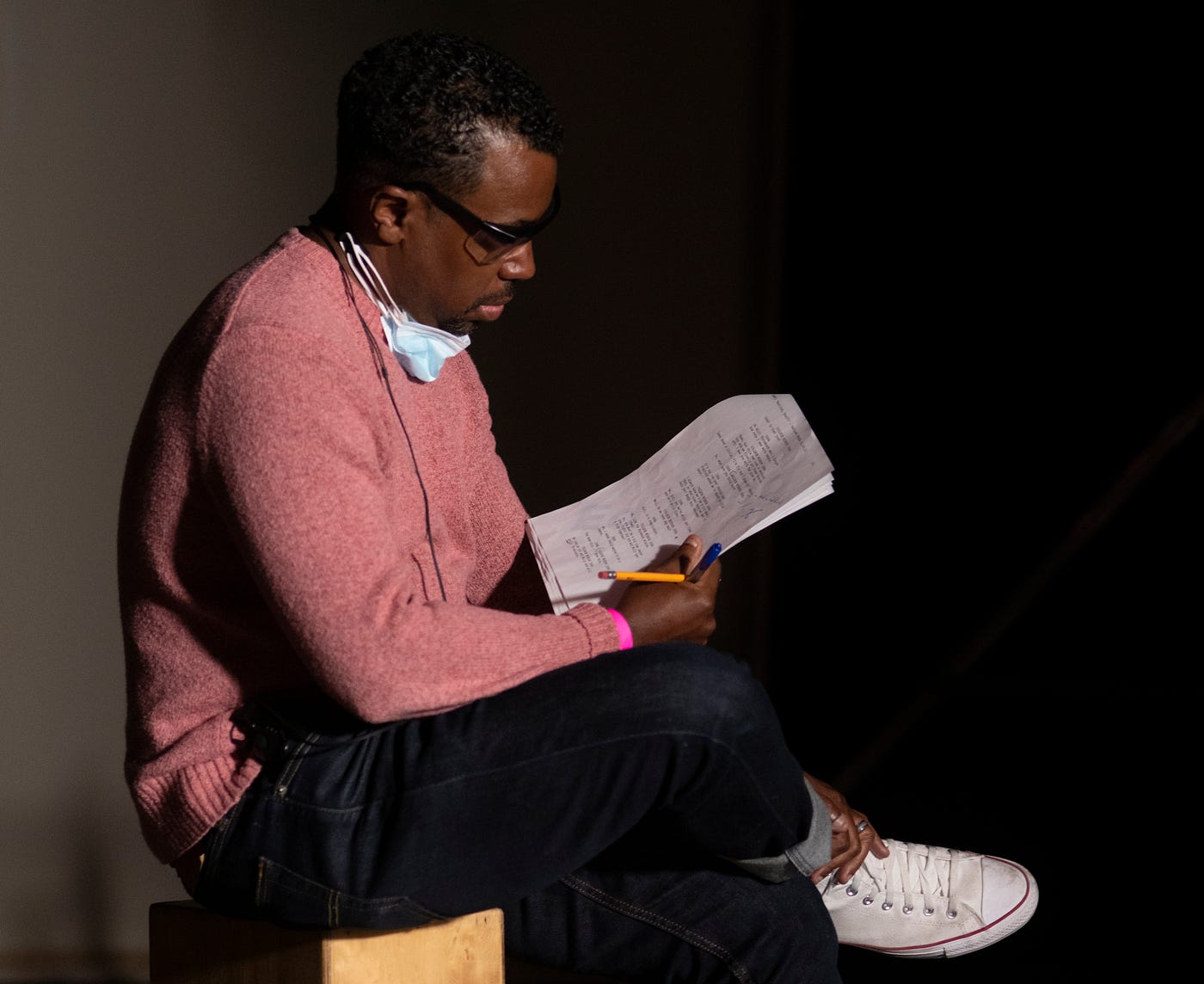
I know you like to have fun with your fans on Twitter, and in the aftermath of Insecure, I still see you interacting with fans. Do you still feel justified about the show’s Lawrence ending? I mean what do you say to the folks who liked Nathan and Daniel? How are you feeling?
Penny: I feel fine [laughs.] I mean, I learned a long time ago that same thing with my family. It’s like, if you get sensitive about [the online draggings], that’s the worst thing you could do. You gotta just like, get in there, get them jokes back. So I love messing with people who are messing with me because I know it’s all like family. It’s never truly malicious. And I find that when people clown with you and you clown back, people love that. And we love that people miss the show, and we felt we really wanted to leave a year early on our terms than a year too late. We never wanted to overstay our welcome and we really wanted to leave on a high note. When I worked on Girlfriends that was the toughest part about that show’s ending was even though we knew it was the last season, we didn’t get to end it on our own terms. The writer strike happened and we never got a chance to go back. And we thought we would, but we didn’t. And so it was nice to start something and end something on your own terms. And I have been on many shows that I’ve never been able to complete. So it was nice to know what we were gonna do from the beginning to the end.
Looking back is there a memory that stands out for you from those early days of shooting? Or just prior to the show blowing up?
Penny: There’s so many things. I think the things I remember the most were just the fun times with Issa [Rae] and Melina [Matsoukas]. We were just really having a lot of fun and knowing we were doing something special, but just not sure how yet. We just stuck together and sat around and figured out things like shooting or writing and rewriting. In the writer’s room back in those days, I think it was episode six or seven when we realized we were having those same arguments and debates [similar to the characters in the show] meaning like so is Jared “gay” if he [has kissed another man] or where Issa and Molly have their first fight because Issa says Molly is jealous because she can’t keep a man, and Issa can. And I remember when we wrote that in the room and it became this whole debate of how the two friends could come back from this argument. And then it’s like if we were arguing about this [plot development] in the room, then people would absolutely argue about this in real life. And then it became this thing of like these are fake people with “real” problems and the light bulb moment was like if [the writers] are discussing it then it has to go in the show.
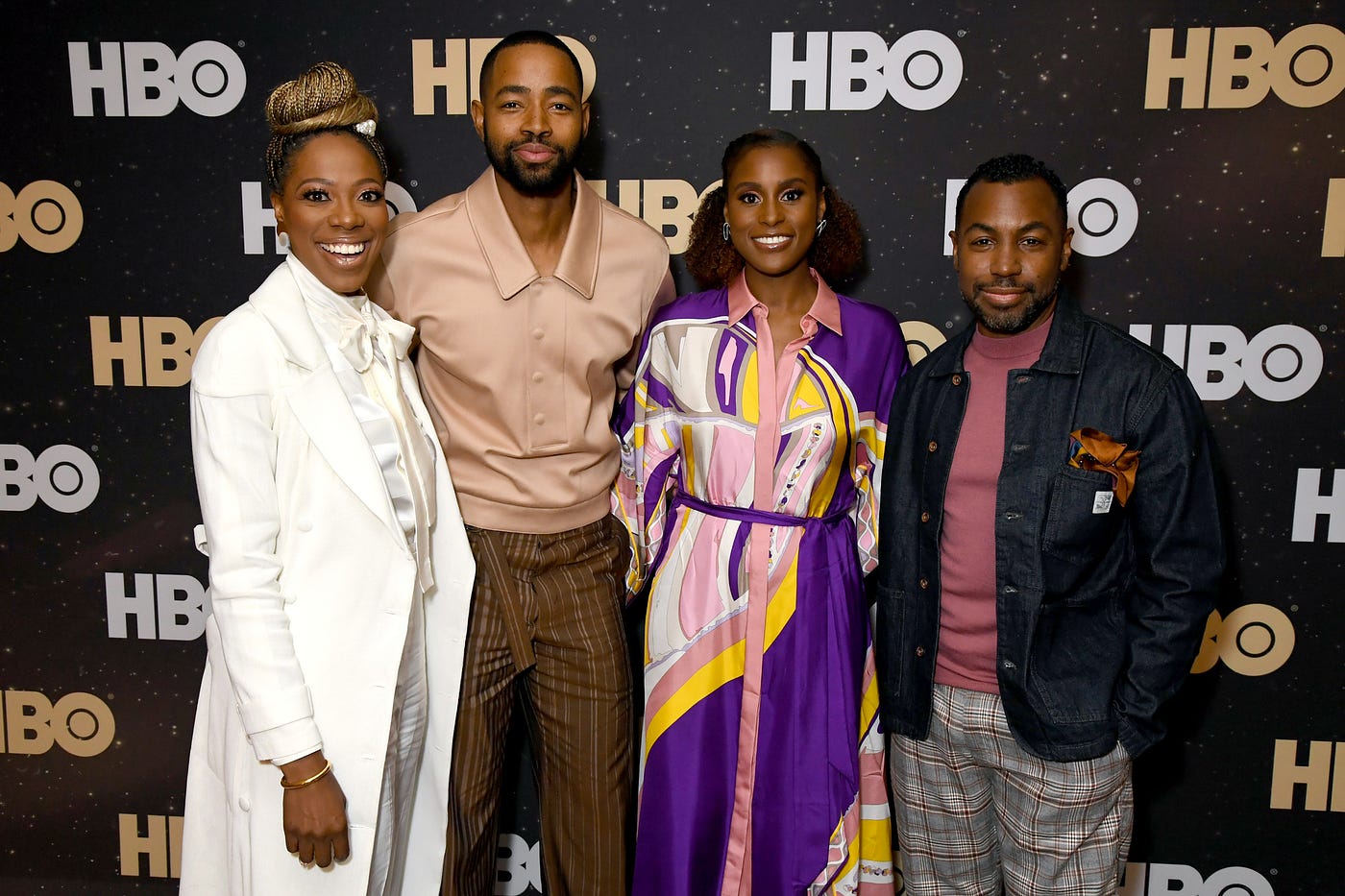
This brings me to my other question perfectly, how did you all decide to name the seasons with phrases each season? Like “Hella…” and “AF.” and “…Okay!?”
Penny: Originally we were all sitting around being like what should we call the titles? And, we didn’t really know what they should be called. And then one of the writers was like, ‘something, something AF.’ And we thought that was a cool idea, but then season two happened. And the whole debate was whether or not we would be doing that style again, so then we looked at what the themes of the seasons were and we thought of titles that way. AF was about Issa trying to leave Lawrence, so she’s trying to bring a certain type of energy out. The last season was Issa asking herself, ‘Am I gonna be okay if do…?’ So the, Okay?! Came from what we were trying to convey with the series ending thematically.
You are involved with a lot of Black female-centric shows, and I mean you have huge experience on iconic TV prior to this, but I’m wondering how you approach these female-led shows as a male?
Penny: I mean, I grew up around a lot of strong Black women, so life did a lot of that [acclimation] for me. Also working on shows like Girlfriends and being a part of Black women-populated writer’s rooms also helped. I’m already a sensitive dude, but being around women and hearing stories and things just made my ear more in tune with the environment. On Happy Endings one of the Executive Producers Jonathan Groff also helped Kenya Barris on Blackish, but, on Happy Endings [series creator] David Caspe had never done television before and Jonathan had. So when they put them together it was cool because he was helping figure out how to make a TV show, but it wasn’t Jonathan’s idea, he was the coach and captain in a sense, but he wasn’t the creator of the show. So they had to really be in sync to make that show successful, and they were. So when I got Insecure I was finding myself in that same type of scenario. So I was asking them for help like, ‘How do you find this balance?’ They helped me figure out how to shepherd and be in a partnership. And on Insecure this dynamic worked because Issa and I have a lot of love for each other and respect and brought all sorts of things to the table. I was never trying to flex my agenda on her show and she was never trying to be dismissive of me because something wasn’t my original idea. We were in concert and I think we both understood how important this show is and we have to protect that above all.
The biggest thing that I always anchored myself to, was at the end of the day, I told Issa when the show is over, I never want you to look back and go, ‘Prent has got in the way of me trying to do this.’ I didn’t want Issa to have any regrets about how to make this show. My job is to help support you make the show you want to make.
Which character do you think you are most like or relate to the most?
Penny: I don’t know. I think at different times in my life and weirdly not just making this show, but in my life in general, I’ve been Lawrence, Molly, and Issa. I could definitely say I don’t relate to Daniel cuz I’ve never been like the hot player that everybody wants to be with. So I could definitely say it’s not Daniel. There’s parts of me that are Chad, who’s like a smart ass. If, if I had to say who I feel like I’m the most I would probably say Issa. And I think that’s why she was the easiest in my mind to write for in a lot of ways because it was a lot of it is me. Like I have Molly tendencies. I definitely have Laura tendencies, but I wouldn’t say I’m more like them. I definitely would say I’m more like Issa because I can be aggressively passive sometimes in those ways, and I’m not just saying that cuz she’s the lead I’m saying it. [Laughs.]

How did you end up on Insecure anyway?
Penny: I was on Brooklyn Nine-Nine at the time. And I’d seen on Deadline that HBO was going to make the pilot but that Larry Wilmore wasn’t going to be able to continue on with it because he was getting his talk show. And so they needed a new showrunner. And at that point, I was a Co-Producer and had been working in television for 11 years, so I thought it would be interesting as I was ready to make another transition at the time. I had been in a lot of white writer’s rooms, which was great, but then I had this chance to work with a Black person, and I hadn’t worked with another Black person in about seven years or so. My agent at the time, Ashley Holland, who is now over at Onyx went to college with Issa. So I asked her for a script and I just related to the script so much like, I had worked in a nonprofit before I was a writer, I knew what it was like to be the only Black person in those spaces because I currently was almost. I grew up in Leimert Park and near Crenshaw where the show was taking place. I knew the world, I knew Molly as a character, I am married to a Molly, my mother is a Molly. So there were just so many things in that script.
I ended up writing Issa a letter because I didn’t know her yet. I just knew she had the web series and I wrote her a letter about why I thought I could be a helpful resource and an asset to the show, and even if she [didn’t want to collab] I would still be a helpful resource. And we met for like 15 minutes and we just laughed and laughed, it’s that thing where you meet someone and have great chemistry. So in the end, it just sort of happened like that.
What should Emmys voters consider about Insecure?
Penny: I mean, I think they should consider the complete show. The comedy category is always weird and interesting to me. The drama category is pretty straightforward. What do people consider comedy these days though? I don’t know. But what I do think is people should consider the whole body of work; the way we tell jokes, the way we shoot our show, the way we tell stories and the way we build characters and moments. I always joke that Insecure is like your favorite showrunner’s favorite show, but we don’t get the wins which is weird to me. Because every time I go somewhere, every showrunner goes, ‘I love your show!’ But for whatever reason, that doesn’t translate to wins. So at least we do have a few nominations. But to me, the production values, the music, the acting, the comedy, the drama is all at such a high level I put that up against any show. And it’s the last season, so I don’t have anything to lose. I challenge anybody to say who does every category better than us. [Laughs.]
Last question: What is a Prentice Penny stamp of authenticity in your own work?
Penny: I think at the core of all my stuff whether I write or direct or gravitate to, I think there’s two things. One, I always love to play with tone. Like I love scenes that can go from comedic to dramatic or dramatic to comedic or take a turn. But I think I’m always at the core of it getting to like what’s at the heartbeat of the humanity of [a scene.] And that’s the thing that I’m always like, yeah all this other sexy stuff is cool, and all this camera work is fine, but if people don’t emotionally connect to the camera work or the costumes or the humanity then what is actually happening right now? And I think that’s the projects I always just gravitate to. If it doesn’t have those elements, then I find it not interesting for me.
[Edited for length and clarity]
[This interview was originally published for The Black Cape magazine]
 Destiny Delights