
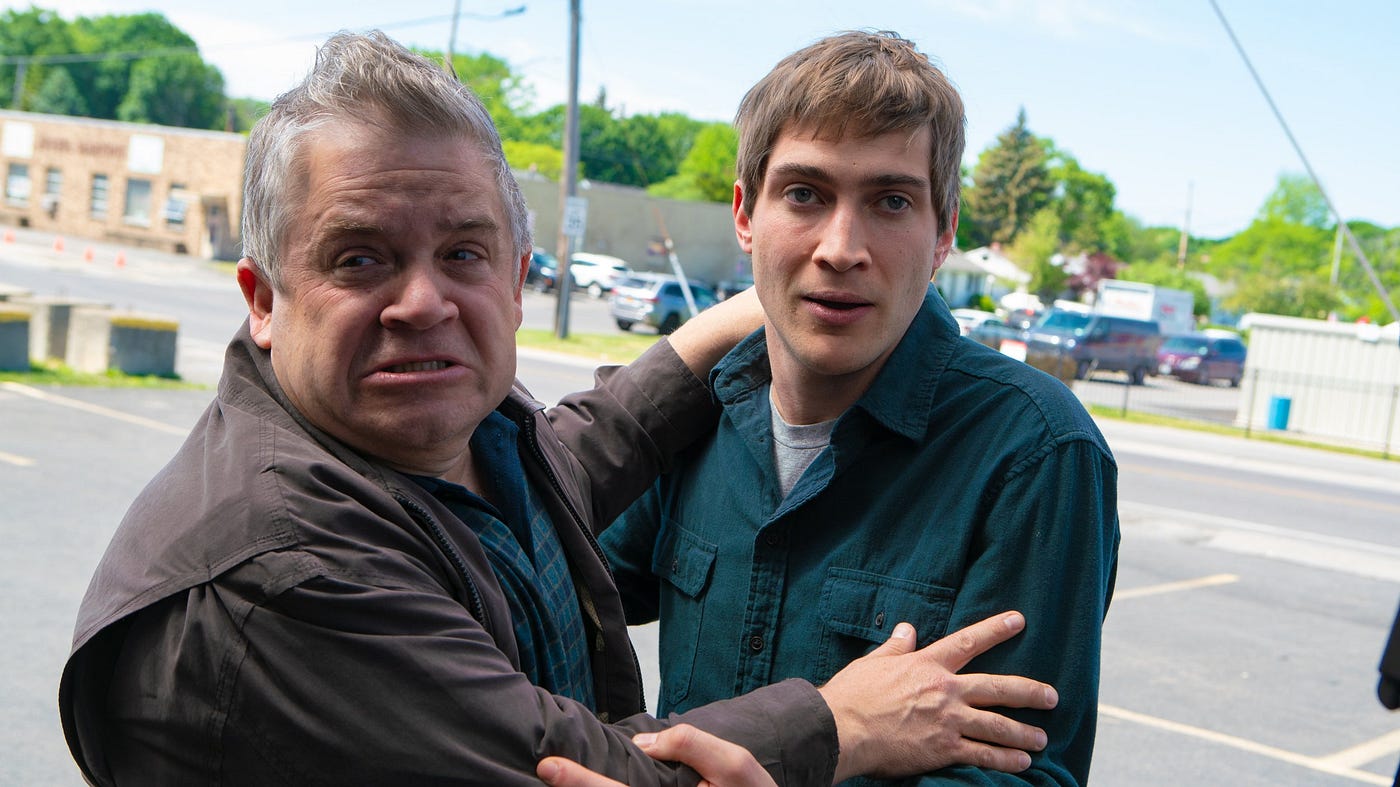
From a sexy and seductive conniving soccer coach in HBO’s The Sex Lives of College Girls to an awkward and suicidal young adult on the outs with his father, writer-director-actor James Morosini is out to prove that he’s got range. I Love My Dad is a heartwarming cringe-comedy tale based on a true story from Morosini’s life involving his father (played by Patton Oswalt) catfishing him out of concern for his wellbeing.
Morosini talks to The Black Cape about his second directorial feature, the risk of being vulnerable and going against the romantic happy ending.
Destiny Jackson: This movie can get a bit chaotic! So, in honor of that, what is your most chaotic trait?
James Morosini: I tend to live in extremes and so I feel like most of my life, I’m just trying to corral my various extremes and, and keep myself somewhat in check. I run really fast in every direction that I go. And I find myself running in many different directions and then having to focus as much as I can.

Few souls would write about their dad catfishing them, nonetheless, survive the incident. So, talk to me about the process of making this film. How did this idea come to you and how long had it been in the pipeline for you?
Morosini: I decided to make a movie out of it probably three years ago. I was walking around New York City with my dad and he brought this idea up, and I hadn’t thought about it for a while and I was looking for my next story. And then it all came rushing back to me and I rushed back to my hotel and I started writing it. I was attracted to the idea of someone doing something wrong for the right reasons. Somebody, you know, my dad was so worried about me, that he went about creating this whole profile and that he went that far to make sure I was okay. It was heartwarming and also alarming at the same time. And that collision of kindness and deception, I thought would make a great story for the screen.
It seems you’re pretty good about opening up and being vulnerable, so I think my question is … ya know? How are you doing now that this film is out in the world?
Morosini: I’ve always been attracted to stories where it feels like someone is confessing a part of themselves or really opening themselves up. Those are the kind of stories that I’ve always leaned into and have always captured my interest. So as much as I can, I try to do the same in my own storytelling and really reveal as much of my inner life as I possibly can. It’s something that I’ve been doing my whole life in one form or another. So, it really feels like what I consider to be my job. And it definitely is a lot to put out there, but what makes it risky is also what makes it so rewarding.
How exactly did you kind of find the balance here between funny and cringe, is there anything that inspired you?
Morosini: So I’ve, I’m obsessed with cringe comedy because we often find ourselves in uncomfortable social situations, but we’re not really supposed to talk about them at the moment. It’s something we tell our friends as a relief like, “Uh…this crazy thing happened. This person thought this, I wanted to say this. But I couldn’t in those moments.” So, we feel very alone. And it’s only through sharing our discomfort with others that we feel seen and understood. Also, we can laugh about it. And I feel like this whole movie is kind of that for me. So in terms of navigating the heart and the humor, I wanted to feel as invested in these characters as I possibly could. I wanted an audience to be able to really understand where they were coming from so that when they’re jumping when they are in these uncomfortable situations, we’re also going through it with them. And so we don’t have anywhere to run. Hopefully, in a way, it’s cathartic for an audience to see the most socially uncomfortable situations possible, because so much of the time we’re experiencing those things by ourselves, and our experiences are kind of invisible.
Did you worry about audience reaction at all while you were making this film? How did you walk yourself through that? Since there are so many risky choices here.
Morosini: I’m always writing and creating for an audience’s experience. So throughout the writing of it and the shooting of it I’m thinking, “OK, how is this gonna resonate? How will the experience be for an audience?” To me, it just comes down to making sure that an audience is really on board with the people in the movie and can understand why they’re doing what they’re doing. So that if [the audience] don’t necessarily agree, they at least understand. And then [perhaps]their curiosity around, “well, how is this gonna play out?” Is peaked throughout [the film]. That’s my goal, at least.
This is not your first feature and certainly not your first time writing and acting. Where do you find yourself being the most challenged of the three? Or most comfortable?
Morosini: I’ve kind of done all three things since I was a little kid. I was always making little videos and I was always in those videos and editing them and coming up with the ideas and then shooting them. So it’s something that I’ve just done my whole life without necessarily thinking too much about it. They all feel like just different sides of the same coin, and they all kind of start with the question of like, “What if this would happen?” Or me wanting to see something for myself. And then putting [that idea] out there in the world, just so I could see [it]. It’s hard for me to separate [the different roles] in my mind.

This is a selfish question. Was there a draft where Becca and Franklin ended up together? Why not go down that path?
Morosini: In an early draft, Franklin did end up with Becca and it was sweet and heartfelt, but also not right for the story because the movie’s ultimately not about Franklin ending up with who happens to be a random person. It’s a movie about Franklin’s relationship with his dad and the love that they have together, and their relationship. And so, I ended up changing it in a pretty late draft to be the ending that’s in there now.
I love the nifty way that you have turned the text conversation into more physical action scenes, meaning, you see the actors on screen acting while they’re texting. These days you mostly see movies and TV just show big popup text and they just leave it at that. What was the delineation here for you and creating the physical aspect instead of just leaving it as texts?
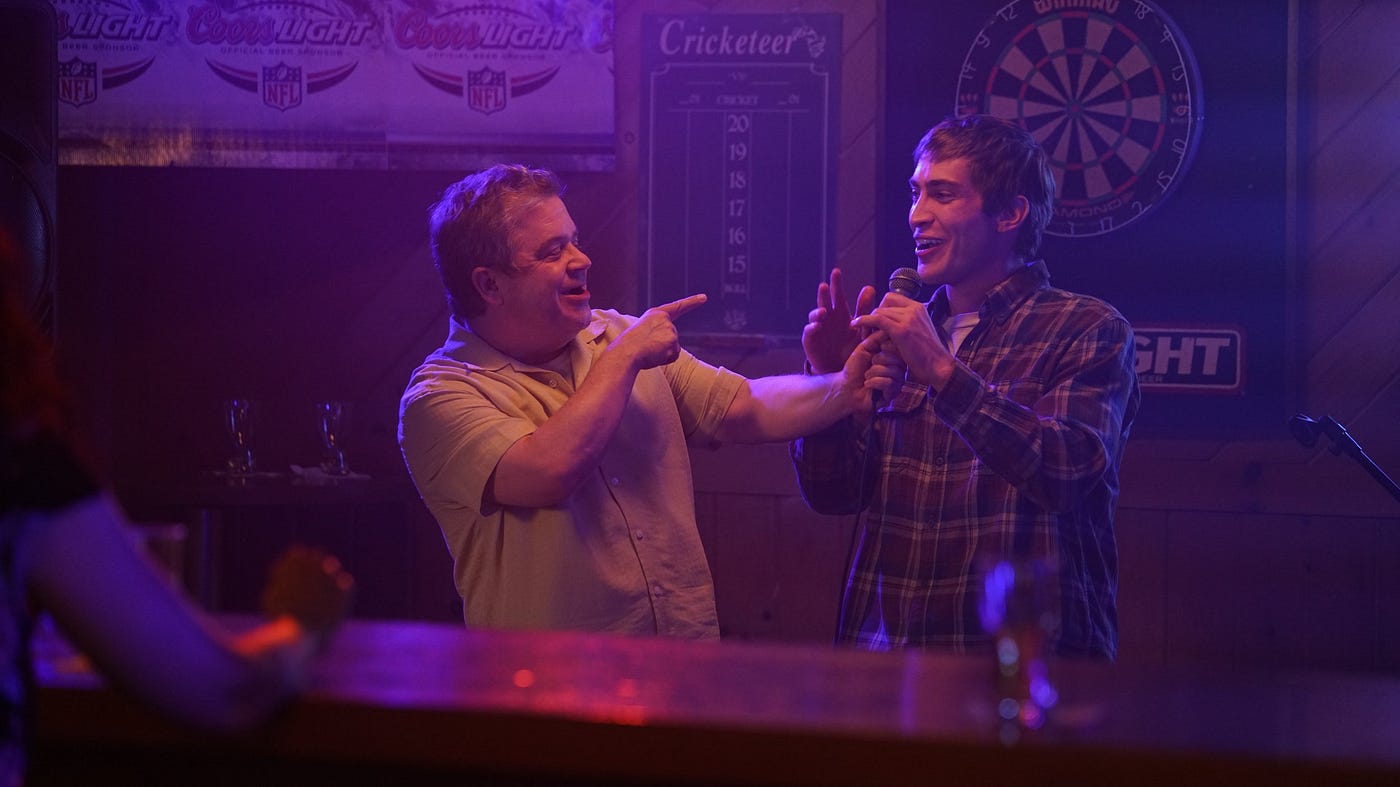
Morosini: I really thought a lot about what it feels like when you’re messaging someone or texting someone, and it often feels like the person is right there beside you and that they are kind of in the same place as you are. And so I just took it a step further and decided, well, what if they were for this film? And it would allow for this dramatic irony and this weird feeling like you’re having to constantly remind yourself that no, Becca is the dad. And it just felt too fun not to do in this movie.
What do you hope audiences get out of this film about mental health and familial relationships?
Morosini: I hope the audience has a great time watching the movie, but I also hope it makes an audience feel seen and understood. And, I hope it alleviates shame for people that have gone through experiences that maybe they don’t want to talk about or that they feel embarrassed by. And, I hope it makes people feel more inclined to maybe forgive themselves and others in their lives.
[Edited for length and clarity]
[This interview was originally published for The Black Cape magazine]
 Destiny Delights