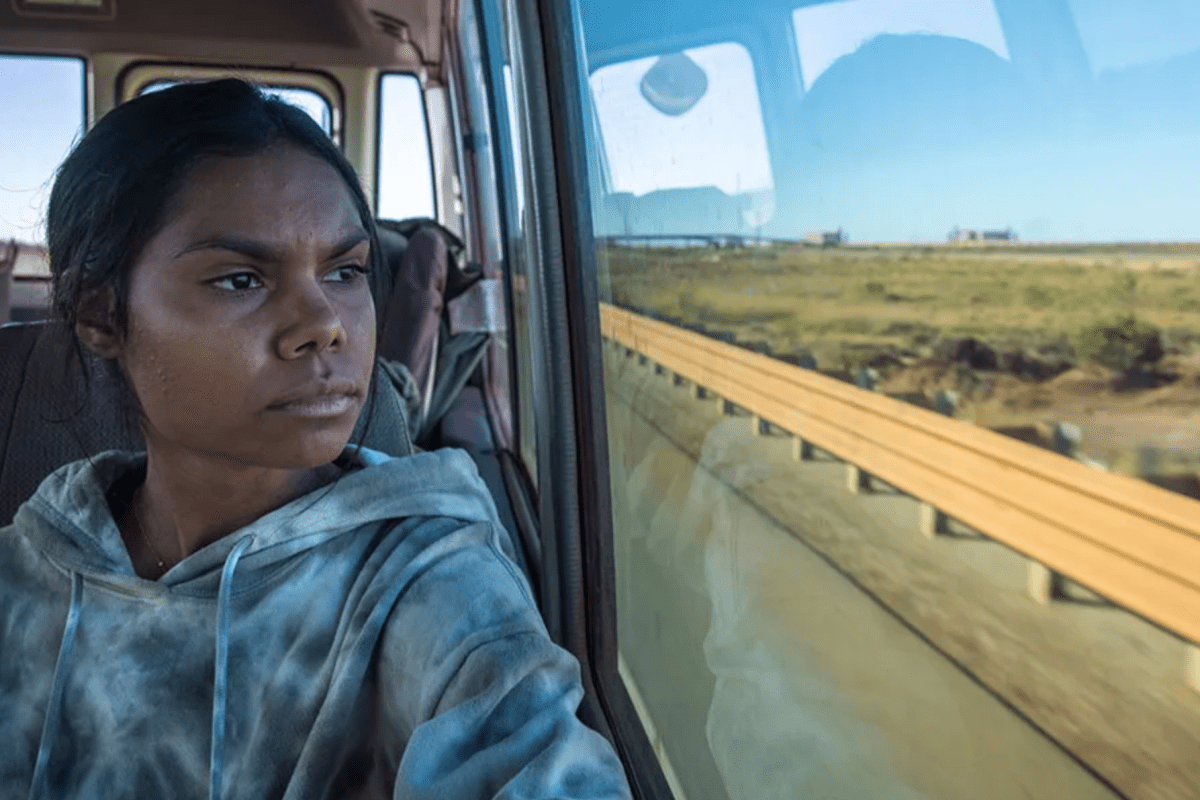
When all hope is lost, sometimes all it takes is to jump on a minibus with five complete strangers and trust the journey. Sweet As, written and directed by debut filmmaker Jub Clerc, is an endearing coming-of-age story about navigating hardship, maintaining resilience, and foraging human connections.
The film follows a 16-year-old First Nations teenager named Murra (Shantae Barnes-Cowan), who has a bit of an attitude problem due to the neglect she faces at home from her drug-addled mother (played with heartfelt vigor by Ngaire Pigram.) To make audiences understand the harsh reality in which Murra lives, the beginning of the film starts out with her stealing food from a local corner store just to survive. One night, while Murra’s mom is throwing a party, a stranger tries to break into her room for nefarious reasons. When Murra tries to explain this to her mom during the party, she at first dismisses Murra’s complaint until mere seconds later, the perpetrator attempts to sexually assault Murra again, but this time in the open. Tired of her mom’s despondence, Murra calls her Uncle Ian (Mark Coles Smith), the local police chief, who soon takes her in after her mom just straight-up abandons her to avoid getting clean at her brother’s behest. It’s a wildly cold opening to a film that is otherwise much lighter than the beginning would suggest.
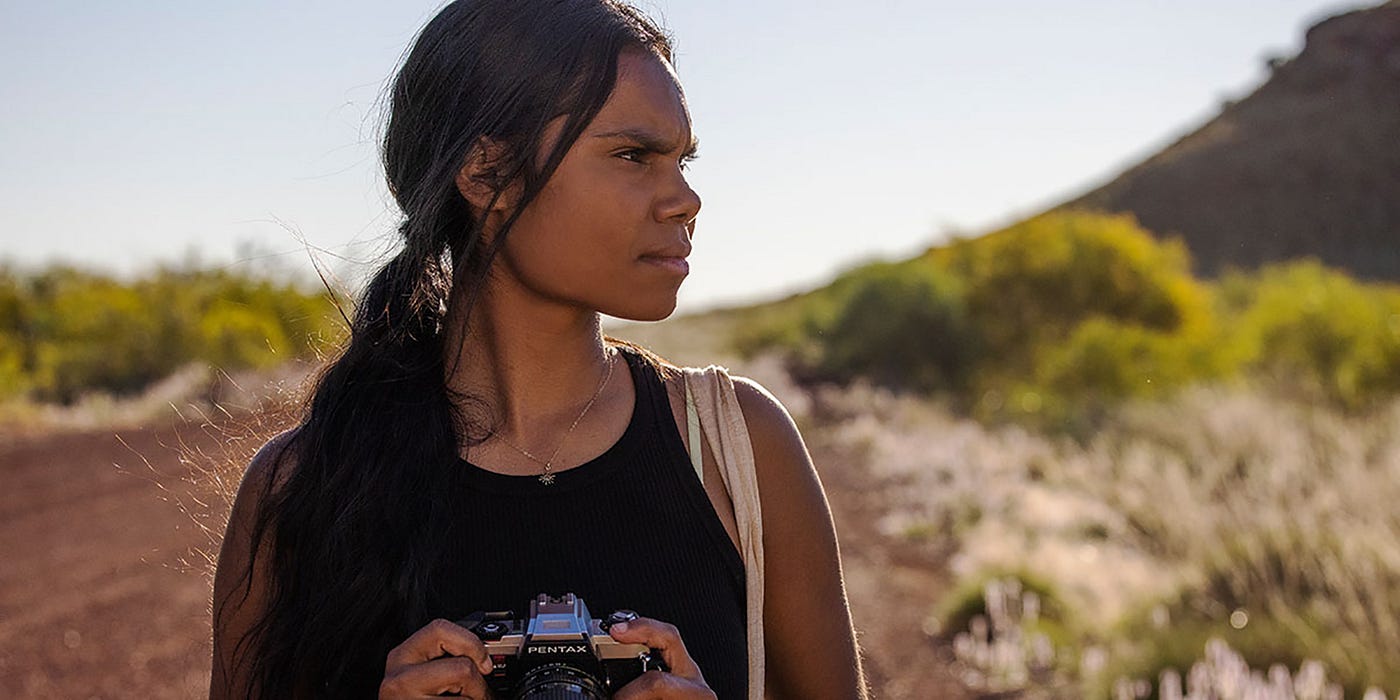
The rest of the film is simple enough, with a few hardships. After Uncle Ian takes Murra in, he tells her — to which she also agrees — that she can’t stay at his house for long, so he gives her an ultimatum. Either he calls child protective services, and she gets placed in the system, or she goes on a “photo-safari,” — which is basically like some kind of adolescent rehab for kids with behavioral problems or broken families. Unfortunately for Murra, she is afflicted with both. (A side note here: it’s unclear why Murra and her lovely Uncle don’t want to live with each other, but perhaps if I were a teenage girl again, I wouldn’t want to live with a cop either.)
After a moment of protest, Murra is sent to the photo safari. There, she and three other misfit children: a goofball named Elvis (Pedrea Jackson), a sexually active drama queen named Kylie (Mikayla Levy), and Sean (Andrew Wallace in his film debut), a nerdy teen who suffers from suicidal ideation, find themselves saddled with two doting camp counselors (played wonderfully by Carlos Sanson Jr and Tamsa Walton).

The underlying themes of the film make themselves known after the two counselors task the misfit bunch to take photos of anything they see along their traveling journey that speaks to them and their emotions. Murra, who grew up in chaos having to fend for herself, struggles with trying to capture the beauty of the landscape around her, and she can’t quite relate to it. She ends up taking pictures of trees and flowers. In one scene, she also takes a photo of the cracked, hardened desert sediment beneath her feet and labels it: “strong but shattered,” surely a reference for herself.
It’s important to note that Sweet As makes history as the first Western Australian feature film to be written and directed by a female Indigenous person, with original support through Screenwest’s West Coast Visions program. And because of this, Clerc is shedding particular light on the cycle of abuse, sometimes found in indigenous families. Murra’s tight-knit relationship with her mother, even if she doesn’t like what her mother does, is an interesting dichotomy that mares Murra throughout the film as she struggles to let down her walls and let the other kids and counselors around her in.
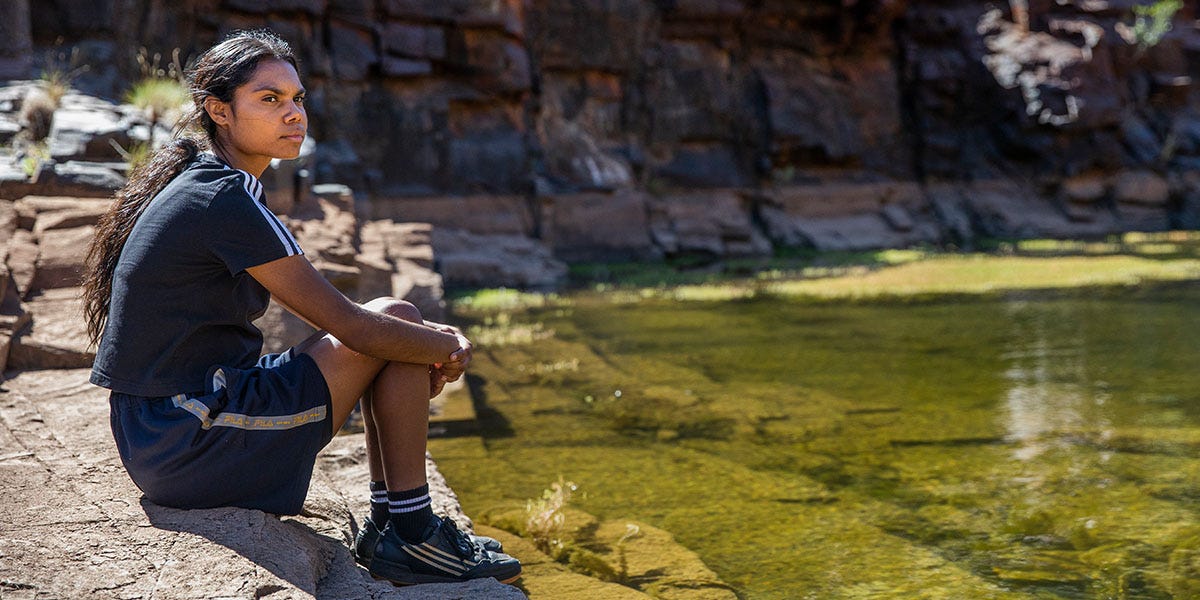
A testament to what a budding emotional powerhouse Barnes-Cowan can be is seen in a touching moment with the counselors, where they teach the kids how to respect the land. They place the river water in their mouths, spit it out, then rub rocks on their body so that the sweat will seep into the soil once they are placed back on the ground. Murra silently cycles through a series of emotions as she ponders what type of person she wants to be. Does she want to be desirable? Does she want to be tough? Does she want to be good? Does she want to be bad? Or maybe somewhere in between? The sometimes sparse aspects of the plot are often filled in by heavy lifting from the cast.
The cinematography by Katie Milwright beautifully captures the canyons’ deep reds and oranges during the midday sun’s peak and dusk and the crisp blue-green of nearly undisturbed river water.
Despite the slightly uneven ebb and flow of serious to light-hearted, Clerc’s direction and script are promising and hopefully inspire children and teens to explore beyond the borders of their (sometimes) confined communities.
Rating: 4/5
[This review was originally published for The Black Cape magazine]
 Destiny Delights